WorkFirst
Washington’s welfare-to-work program is based on the 1996 federal Temporary Assistance to Needy Families (TANF) welfare reform legislation. The aim of WorkFirst is to help low-income families become self-sufficient by providing training and support services necessary for parents to get a job, keep a job, and move up a career ladder. This study is limited to WorkFirst participants who enrolled in an employment or training component.
State Core Indicator Results
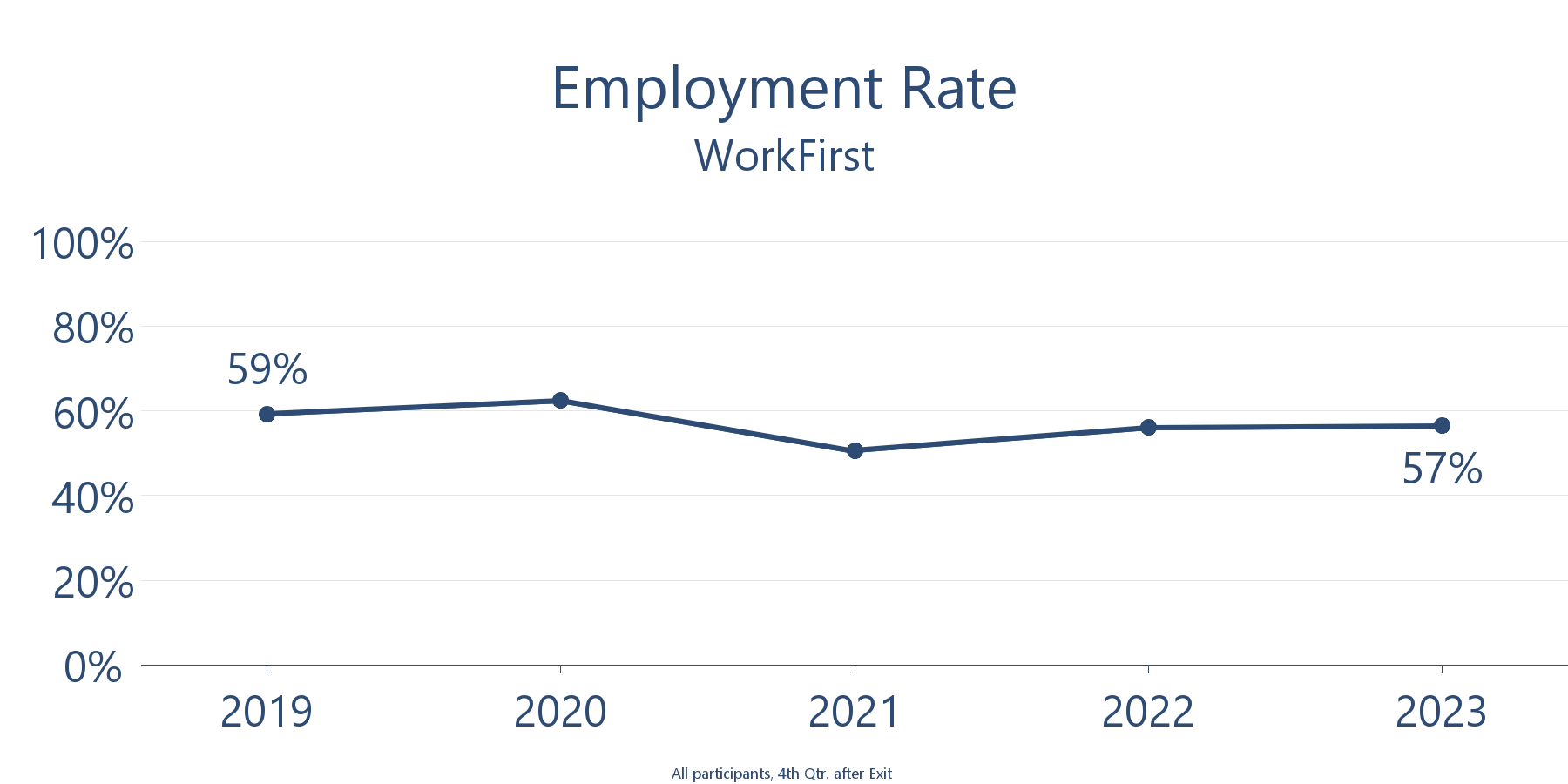
| Employment Percentage of participants in paid employment four quarters after leaving the program. * |
57% |
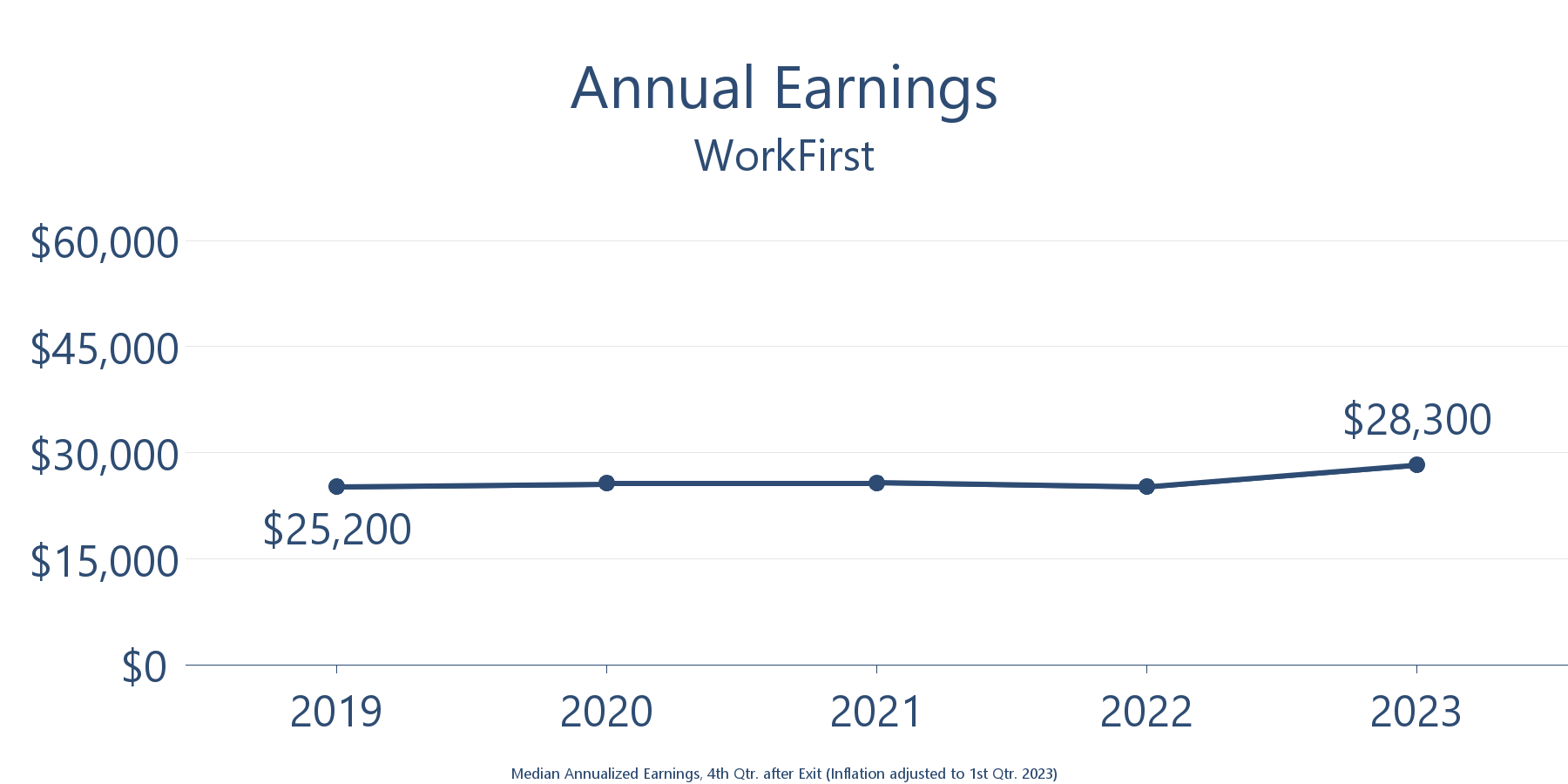
| Earnings Median annualized earnings four quarters after leaving the program. |
$28,300 |
| Skills The program has not provided data for an aggregated measure of skills attainment. |
N/A |
| Net Employment Effect Additional employment rate attributable to the workforce development program. ** |
-0.4% |
| Net Participant Benefits Additional yearly earnings attributable to program participation (adjusted for benefits, taxes, and costs of participation). ** |
$2,400 |
| 10-Year Economic Impact Economy wide 10-Year net economic benefit provided by the workforce development program. ** |
$95 Million |
| 10-Year Taxpayer Return on Investment Taxpayer’s 10-Year net return from an investment in the workforce development program. ** |
$-0.30 to 1 |
*Includes out-of-state employment data. Does not include self-employment. **See latest Net Impact Study.